
Sauces & Condiments
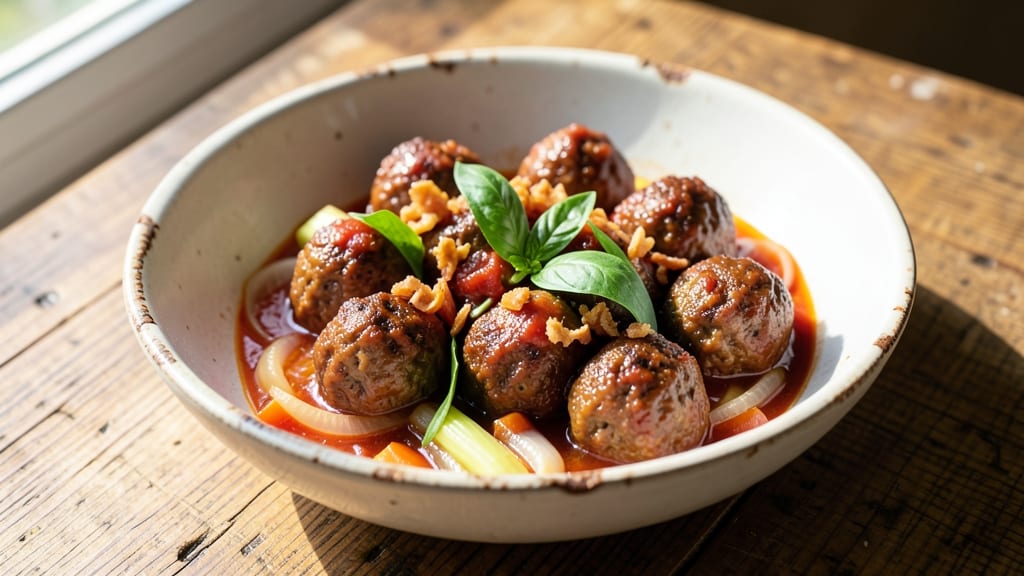
This authentic Italian meatball sauce transforms simple ingredients into a deeply flavorful ragù that clings to every strand of pasta. The secret lies in slow simmering crushed tomatoes with garlic, herbs, and a splash of red wine—allowing the sauce to develop layers of umami richness that store-bought versions can't match.
I've perfected this recipe over years of testing, ensuring it delivers the same depth you'd find in a Roman trattoria.
The foundation starts with a proper soffritto—onions, carrots, and celery cooked until sweet and translucent—before adding garlic and crushed tomatoes. A splash of red wine deglazes the pan, infusing the sauce with complexity, while fresh herbs like basil and oregano brighten the flavors.
The sauce thickens naturally as it simmers, creating a velvety texture that coats pasta perfectly without being overly heavy.
What sets this sauce apart is its balance: tangy from the tomatoes, savory from the wine reduction, and aromatic from the herbs. It's the kind of sauce that tastes even better the next day, as the flavors meld and deepen.
Whether served over al dente pasta, with polenta, or as a hearty filling for lasagna, this ragù delivers restaurant-quality results at home.
Make a double batch—this sauce freezes beautifully and only gets better with time. The key is patience; rushing the simmering process results in a thin, watery sauce, while letting it work its magic transforms it into something truly special. Here's how to make it.
Ingredients for authentic italian meatball sauce
Twelve ingredients for a sauce that tastes like a Roman trattoria’s secret.
| Ingredient | Amount | Notes |
|---|---|---|
| Extra-Virgin Olive Oil 🫒 | ½ cup | High-quality, fruity variety |
| Yellow Onion 🧅 | 1 whole | Medium size, finely chopped |
| Carrot 🥕 | 1 whole | Medium size, finely diced |
| Celery Stalks 🧅 | 2 whole | Medium size, finely chopped |
| Garlic Cloves 🧄 | 4 cloves | Fresh, minced finely |
| Crushed Tomatoes 🍅 | 28 oz | San Marzano preferred |
| Dry Red Wine 🍷 | ½ cup | Bold, like Cabernet Sauvignon |
| Ground Beef 🥩 | 1 ½ lb | 80/20 fat ratio preferred |
| Fresh Basil Leaves 🌿 | ½ cup | Packed, chopped finely |
| Dried Oregano 🍃 | 1 tsp | Italian variety preferred |
| Salt 🧂 | 1 ½ tsp | Diamond Crystal kosher salt |
| Freshly Ground Black Pepper 🌶️ | ½ tsp | Coarsely ground |
The San Marzano tomatoes are non-negotiable here—they’re sweeter, meatier, and free from watery fillers. Whole Foods or Italian specialty markets carry them in cans; if unavailable, Muir Glen is a solid alternative. The 80/20 ground beef keeps the meatballs juicy, and Costco sells it pre-ground for convenience. For the soffritto, chop the onion, carrot, and celery into a fine dice—smaller pieces mean more flavor extraction. Fresh garlic should smell pungent, not musty, and Penzeys sells pre-peeled cloves if you’re short on time.
No red wine? Substitute beef broth with a splash of balsamic vinegar—it mimics the acidity and depth. Fresh basil can be swapped for dried at one-third the amount, but the flavor won’t be the same. If you’re out of oregano, thyme or marjoram work in a pinch, though the Italian profile is distinct. For the meatballs, ground pork mixed with beef adds richness, but pure beef works fine. The crushed tomatoes can be replaced with whole peeled tomatoes blended with their juices if you prefer a chunkier texture. Always taste and adjust salt—kosher salt measures differently than table salt, so start with half and add as needed.
Store the sauce in airtight glass jars with a thin layer of olive oil on top to preserve freshness. Keeps in the fridge for 5-6 days and freezes beautifully for up to 3 months. For meatballs, freeze them raw on a tray before transferring to a bag—this prevents clumping. Reheat sauce gently on the stove, stirring occasionally. The flavors deepen over time, so day-old sauce tastes even better. Double the batch; this ragù only gets more complex with reheating.
Why You'll Love This Recipe
- Sofrito Shortcut: I swear by that onion-carrot-celery base—it’s the secret to depth without fuss. Toss it in a food processor for 30 seconds, and suddenly you’ve saved 15 minutes of chopping while building the most aromatic foundation for your sauce. (Yes, even on a Tuesday night.)
- Garlic Confidence: The moment those cloves hit the olive oil? Pure magic. Low and slow caramelization turns them from sharp to sweet, then the crushed red pepper and basil tie it all together—like a warm hug in a pot. Honestly, this is the kind of flavor that makes you want to eat straight from the spoon.
- Meal Prep MVP: This sauce begs to be made in bulk. Simmer it for 45 minutes, then freeze half for lazy Mondays or pop it into pasta for unexpected company. Between us, the second day is often better—meatballs reabsorb the sauce like sponges, and the flavors just get richer.
- Pantry-Friendly Power: No fancy ingredients here—just olive oil, veggies, and spices you likely already have. That celery and carrot combo? It’s the unsung hero that keeps the sauce from tasting flat or one-dimensional. Plus, it’s cheap enough to make twice the batch without blinking. Budget win.
Step-by-step instructions for authentic Italian meatball sauce
This method delivers the deep, complex flavors of traditional Italian meatball sauce.
Build the Flavor Base with Sofritto
Heat the 0.5 cup extra-virgin olive oil in a large Dutch oven over medium-low heat. Add the finely chopped yellow onion, diced carrot, and chopped celery stalks. Cook for 10-12 minutes until the vegetables soften and the onion becomes translucent.
Here's where the magic happens: the slow cooking of these vegetables creates a sweet, aromatic base called soffritto. Stir occasionally to prevent burning—this is the foundation of your sauce's depth. You'll know it's ready when the vegetables lose their raw bite and the oil begins to glisten with their rendered juices.
Add the 4 minced garlic cloves and cook for an additional 1 minute until fragrant. Be careful not to let the garlic brown—it should just perfume the mixture. Remove the pan from heat and set aside for now. This aromatic base will carry through every spoonful of your final sauce.
Develop the Sauce with Wine and Tomatoes
Return the Dutch oven to medium heat and add the 0.5 cup dry red wine. Stir and let it simmer for 3-4 minutes until it reduces by about half and the alcohol cooks off. This step is crucial—it removes the harshness of the wine and concentrates its flavor.
Stir in the 28 oz crushed tomatoes, 1.5 tsp salt, and 0.5 tsp freshly ground black pepper. Bring to a gentle simmer and cook uncovered for 20-25 minutes. This slow reduction allows the tomatoes to break down and develop their natural sweetness while building a rich, velvety texture.
I like to taste the sauce at this stage—it should be balanced between acidity and sweetness. If it needs more depth, this is the last chance to adjust seasoning before adding the meatballs. The sauce should coat the back of a spoon but still be loose enough to stir easily.
Cook the Ground Beef Until Browned
While the tomato sauce simmers, heat a separate large skillet over medium-high heat. Add the 1.5 lb ground beef (80/20 fat ratio) and cook, breaking it apart with a wooden spoon, until it's well browned—about 8-10 minutes. The fat should render out and the meat should develop a deep brown crust.
This browning step is essential for creating the meatball sauce's characteristic depth. Don't drain the fat—it contains concentrated flavor that will infuse your sauce. Once the beef is fully browned, drain it in a colander set over a bowl to catch the rendered juices, then transfer both the beef and the drippings to the simmering tomato sauce.
Stir the browned beef into the sauce and add the 1 tsp dried oregano. Let the mixture simmer together for 15 minutes, stirring occasionally. This allows the beef to absorb the sauce's flavors while the oregano infuses its earthy notes. The sauce should now be thick enough to coat the back of a spoon but still be pourable.
Finish with Fresh Basil and Rest
Remove the sauce from heat and stir in the 0.5 cup finely chopped fresh basil leaves. The basil adds a bright, fresh finish that cuts through the richness of the meat and tomatoes. Taste and adjust seasoning if needed—this is your final chance to balance the flavors before serving.
Let the sauce rest for 10-15 minutes at room temperature. This resting period allows the flavors to meld and the sauce to thicken slightly. The basil will continue to release its aroma, and the meat will absorb the remaining juices. Serve immediately over your choice of pasta or with crusty bread to soak up every last drop of that authentic Italian flavor.
Pro Tips For Making Authentic Italian Meatball Sauce
- Sweat, Don’t Sauté the Sofrito: The onion, carrot, and celery (your soffritto) should release moisture slowly over 10–12 minutes on medium-low heat—no browning, just a gentle simmer. After burning two batches of this base, I learned: if it’s sizzling like bacon, you’re doing it wrong. Cover the pot for the first 5 minutes to help it break down faster, then uncover and stir occasionally.
- Finely Dice the Aromatics: Skip the food processor for the onion, carrot, and celery—this isn’t a stew. Chop them into matchstick-thin pieces (about 1/8-inch) so they dissolve into the sauce instead of sitting as chunks. I used to rough-chop them, and the texture always felt off. A sharp knife and patience here make the difference between "meh" and "oh wow."
- Salt the Meatballs Before Browning: Toss the meatballs in seasoned flour or breadcrumbs before they hit the pan. This seals the seasoning inside and prevents them from absorbing oil like sponges. I skipped this once and ended up with bland, greasy meatballs—now I salt them like I mean it, even if it feels excessive.
- Deglaze with a Splash of Wine: After browning the meatballs, don’t just dump in the tomato sauce. Splash 2–3 tablespoons of dry white wine (or even broth) first, scraping up the browned bits stuck to the pan. This adds depth that store-bought sauce can’t match. Yes, it’s an extra step, but it’s the thing that makes your sauce taste homemade.
Dietary considerations for this dish
Gluten-Free Adaptations
This sauce is naturally gluten-free, but always check labels on ingredients like San Marzano tomatoes and dried oregano for hidden gluten. The 80/20 ground beef is safe, but avoid breadcrumbs if making meatballs separately. For extra thickness, simmer the sauce uncovered to reduce naturally—no gluten-containing roux needed. 🌱
Dairy-Free Options
This sauce requires no dairy, making it perfect for lactose-intolerant diets. The richness comes from the extra-virgin olive oil, red wine, and ground beef fat. If serving with pasta, choose gluten-free options like brown rice or chickpea pasta for a fully allergy-friendly meal.
Vegetarian Swap
For a meat-free version, replace the 1.5 lb ground beef with 1 lb lentils or mushrooms (cremini or portobello). Sauté the mushrooms first to develop umami depth, then proceed with the same tomato-wine reduction. Add 1 tsp soy sauce or miso paste for extra savory notes. 🌿
Low-Carb Adjustments
To make this keto-friendly, skip the pasta and serve the sauce over cauliflower rice or zucchini noodles. The sauce's natural thickness works perfectly with these low-carb bases. For extra richness, stir in 1 tbsp butter at the end for a decadent finish.
Allergen-Friendly Tips
For nut allergies, ensure all ingredients are nut-free—especially the extra-virgin olive oil (some brands process in shared facilities). For egg allergies, no adjustments are needed since this sauce contains no eggs. Always double-check labels on dried herbs and canned tomatoes for cross-contamination warnings.
Protein Variations
For poultry lovers, substitute 1 lb Italian sausage (check for gluten-free labels) or ground turkey for the beef. Seafood fans can use chopped shrimp or clams—simmer them in the sauce for just 3-4 minutes until cooked through to avoid overcooking. 🦐
Nutrition facts
Frequently asked questions
Why does this sauce need a long simmering time?
The extended simmering—45-60 minutes total—is essential for developing the sauce's deep, complex flavors. This process breaks down the tomatoes' natural sugars and acids, creating a balanced sweet-tangy profile while allowing the wine and herbs to fully infuse. The slow reduction also thickens the sauce naturally, giving it that perfect cling to pasta without needing cornstarch or flour.
Can I make this sauce without red wine?
Yes! Replace the 0.5 cup red wine with 0.5 cup beef broth plus 1 tablespoon balsamic vinegar for acidity. The broth adds depth while the vinegar mimics wine's acidity and complexity. For extra richness, add 1 teaspoon soy sauce or 1 teaspoon Worcestershire sauce to enhance umami. The sauce will still be delicious—just slightly different in character.
How do I prevent the sauce from getting too thick?
If your sauce thickens too much, simply add 2-3 tablespoons of warm water or pasta water while stirring. The sauce should coat the back of a spoon but remain pourable. For future batches, keep the sauce uncovered during simmering to allow moisture to evaporate naturally. If using a Dutch oven, ensure it's the right size—too small a pot can cause over-reduction.
What's the best way to store leftover sauce?
Let the sauce cool completely, then transfer it to airtight glass jars. For fridge storage, it keeps for 5-6 days with flavors deepening over time. For longer storage, freeze the sauce in portions—it maintains quality for up to 3 months. To reheat, warm gently on the stove, stirring occasionally. The sauce often tastes better the next day as flavors meld further.
Can I use this sauce for dishes other than pasta?
This versatile sauce works beautifully with polenta, mashed potatoes, or as a filling for lasagna. For a hearty meal, serve it over crusty bread with a side salad. You can also use it as a topping for baked ziti or stuffed shells. The sauce's rich texture makes it perfect for any dish that needs a robust tomato-meat flavor.