
Sauces & Condiments
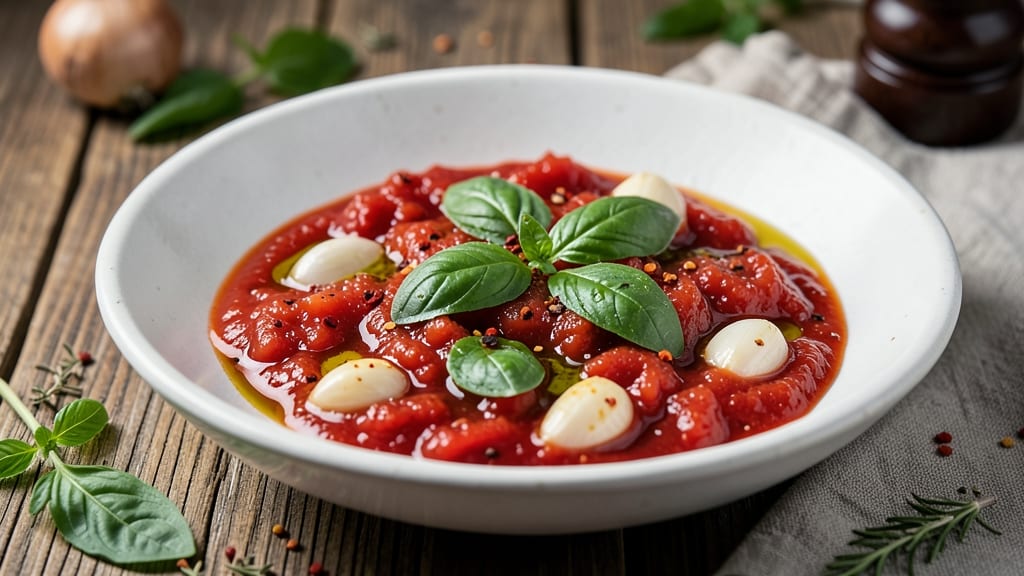
This authentic Italian fresh tomato sauce captures the essence of summer in every spoonful—bright, vibrant, and finished with fresh basil that makes it taste like Nonna’s kitchen. 🌿 The secret lies in using ripe, sun-kissed tomatoes (or fresh vine tomatoes) and letting them simmer gently until their natural sweetness shines through.
No heavy cream or meat here—just pure, unadulterated Italian flavor built on olive oil, garlic, and a touch of red pepper flake for depth.
The process is simple but transformative: blanching tomatoes to loosen their skins, crushing them by hand (or using a food mill) to preserve texture, and simmering just until the flavors meld. The sauce should be liquid enough to coat pasta beautifully yet rich enough to cling to every strand.
Fresh basil added at the end keeps the sauce bright, not bitter—this is the hallmark of authentic Italian technique.
What you’ll end up with is a sauce that’s restaurant-quality but made entirely at home—no shortcuts, just tradition. It’s perfect for tossing with fresh pasta, drizzling over grilled vegetables, or serving with crusty bread.
The beauty of this sauce is in its versatility: use it immediately for peak freshness, or store it for up to a week in the refrigerator, where the flavors deepen like a fine wine.
For those who love customization, you can adjust the consistency by simmering longer for a thicker sauce or adding a splash of water for a lighter one. The key is balance—sweet, tangy, and aromatic, with just enough acidity to keep it vibrant. Let’s get started on this timeless Italian classic.
Ingredients for authentic italian fresh tomato sauce
Sun-ripened tomatoes, fresh basil, and olive oil—just eight ingredients for Nonna-worthy sauce.
| Ingredient | Amount | Notes |
|---|---|---|
| Fresh Vine Tomatoes 🍅 | 2 lb | Ripe, sun-ripened, blanched whole |
| Extra-Virgin Olive Oil 🫒 | ½ cup | High-quality, fruity variety |
| Garlic Cloves 🧄 | 4 cloves | Peeled, lightly crushed |
| Red Pepper Flakes 🌶️ | ½ tsp | Adjust for desired heat |
| Fresh Basil Leaves 🌿 | ½ cup | Packed, stems removed |
| Salt 🧂 | 1 ½ tsp | Diamond Crystal preferred |
| White Wine Vinegar 🍷 | 1 tbsp | For brightness |
| Granulated Sugar 🍬 | 1 tsp | Balances acidity |
Tomatoes are the heart of this sauce. Fresh vine tomatoes from a local market or farmers' stand have the best flavor, but heirloom varieties from the grocery store work too. Look for tomatoes that smell sweet and give slightly when squeezed—those are the ones packed with flavor. If you can't find vine tomatoes, San Marzano canned tomatoes are the next best thing, but skip the sauce with added salt or sugar. The basil? Grow your own or buy from a trusted source—the freshest leaves make all the difference. I always grab extra because half goes into the sauce and half gets torn over the top at the end.
No fresh tomatoes? Roma tomatoes work in a pinch, but they won’t have the same depth of flavor. Short on basil? Dried basil at one-third the amount gets you close, but the sauce won’t be as bright. The white wine vinegar adds a touch of acidity—if you don’t have it, lemon juice works too. For the olive oil, avoid the cheap stuff—look for extra-virgin with a fruity aroma. The sugar balances the acidity, but if you're avoiding it, a pinch of honey (if not vegan) or a splash of tomato paste can help. The red pepper flakes are optional but add that authentic Italian kick—start with half a teaspoon and adjust to taste.
This sauce is best used fresh, but it keeps beautifully in the fridge for up to a week if you seal it tightly with a layer of olive oil on top. For longer storage, freeze it in ice cube trays—perfect for adding to pasta later. The sauce will thicken as it cools, so if it's too thick when reheating, just add a splash of water or pasta water. If you make extra, share it with neighbors—this sauce disappears fast. And trust me, it tastes even better the next day as the flavors meld.
Why You'll Love This Recipe
- No-Chop Necessary: I swear, the only prep here is peeling tomatoes and crushing garlic—no dice, no blender, no fuss. Just rip, slice, and simmer while you stir your pasta water.
- Sunshine in a Sauce: That first sizzle of garlic in olive oil? Pure magic. The tomatoes caramelize into a bright, tangy sweetness, and the basil? It’s like a fresh breeze after a summer storm—no dried herbs here.
- Pasta’s Best Friend: Slather it on spaghetti, toss it with grilled chicken, or even drizzle it over bruschetta. Honestly, I’ve used it in everything from weeknight dinners to lazy Sunday brunches—it’s the glue that makes meals feel special.
- Budget Magic: A handful of vine tomatoes and a bulb of garlic stretch further than you’d think. I’ve made this for six people for under $10, and it still tastes like I spent hours in a Roman kitchen. Leftovers? Freeze them—next week’s lunch is sorted.
Step-by-step instructions for authentic Italian fresh tomato sauce
This is how Nonnas make it—simple, bright, and bursting with summer flavor.
🍳 Step 1: Blanch and Peel the Tomatoes
Start by cutting the 2 lb fresh vine tomatoes in half crosswise. Bring a large pot of water to a rolling boil and carefully add the tomato halves, cut-side down. Let them cook for 30-45 seconds until you see the skins start to loosen and small bubbles form around the edges.
Using a slotted spoon, transfer the tomatoes to a bowl of ice water to stop the cooking. The skins should now peel off easily with your fingers or a small knife. Discard the skins and roughly chop the tomatoes into ½-inch pieces. This blanching process removes excess acidity and intensifies the tomato flavor—trust me, it makes all the difference in an authentic sauce.
🍳 Step 2: Sauté Garlic in Olive Oil
Heat the 0.5 cup extra-virgin olive oil in a large, heavy-bottomed saucepan over medium-low heat. Add the 4 peeled, lightly crushed garlic cloves and cook gently for 2-3 minutes until they're fragrant but not browned. Watch them closely—garlic burns quickly and turns bitter.
Here's the thing—you want that golden aroma without any color change. Remove the pan from heat for just a moment if it starts to darken. The garlic should smell like a warm Italian kitchen, not like a charred campfire. This is your flavor foundation, so take your time with this step.
🍳 Step 3: Cook the Tomatoes Low and Slow
Return the pan to medium-low heat and add the chopped tomatoes, 1.5 tsp salt, 1 tsp granulated sugar, and 0.5 tsp red pepper flakes. Stir gently to combine, then reduce the heat to low. Let the sauce simmer uncovered for 20-25 minutes, stirring occasionally.
You're looking for the tomatoes to break down completely and the sauce to thicken slightly. The mixture should reduce by about one-third, with the tomatoes softening but not disintegrating into mush. This slow cooking develops deep, complex flavors—don't rush it. If the sauce looks too thick before the 20 minutes are up, add 1-2 tablespoons of water to keep it moving.
🥘 Step 4: Brighten with Vinegar and Finish with Basil
After the tomatoes have softened, stir in the 1 tbsp white wine vinegar. This adds that signature Italian brightness that cuts through the richness. Let the sauce simmer for another 5 minutes to let the vinegar mellow and integrate with the other flavors.
Remove the pan from heat completely and stir in the 0.5 cup fresh basil leaves. Let the sauce sit for 5 minutes off the heat—this allows the basil to infuse without wilting. The leaves will soften slightly and release their aromatic oils into the sauce. Taste and adjust seasoning with more salt or red pepper flakes if needed. The sauce should be balanced—sweet from the tomatoes, bright from the vinegar, with just a hint of heat.
⏰ Step 5: Rest and Serve
Let the sauce rest for 10-15 minutes before serving. This resting period allows all the flavors to meld together perfectly. The sauce will thicken slightly as it cools, which is exactly what you want for that authentic Italian texture.
Serve immediately over your favorite pasta, drizzled with a little more extra-virgin olive oil and topped with additional fresh basil leaves. This sauce is best enjoyed fresh—it won't keep well for more than a day or two in the refrigerator, but that's okay. It's meant to be savored while it's at its peak. Trust me, your taste buds will thank you for making it this way.
Pro Tips For Making Authentic Italian Fresh Tomato Sauce
- Crush Tomatoes by Hand: Skip the food mill or blender—grab a handful of vine tomatoes and smash them with your fists against the side of a bowl. The rough texture and slight oxidation from this method deepens the flavor more than any gadget ever will. (Yes, it’s messy, but that’s how Nonnas do it.)
- Sweat Garlic Low and Slow: After adding minced garlic to your olive oil, turn the heat down to the lowest setting you can tolerate. Let it bubble gently for 3-4 minutes until it’s golden but not browned—burnt garlic tastes bitter, and that’s the last thing you want in a bright tomato sauce. Patience here makes all the difference.
- Salt the Tomatoes Early: Toss your crushed tomatoes with a generous pinch of salt (about ½ teaspoon per pound) the second they hit the pan. This draws out moisture, concentrates the flavor, and prevents a watery sauce later. I learned this the hard way after making a batch that tasted like tomato juice instead of sauce.
- Finish with Raw Basil: Tear fresh basil leaves and add them raw at the very end, right before serving. Cooking basil kills its bright aroma and turns it bitter—save that for pesto. A handful of leaves folded into the sauce just before eating is the only way to get that authentic Italian restaurant taste. (And no, you can’t just add it later—mix it in properly.)
Wine and beer pairings for this authentic italian fresh tomato sauce
Classic Italian Wine
For this bright, fresh tomato sauce, a crisp Italian white wine is your best friend. I always reach for a Vermentino from Sardinia or a Pinot Grigio from Alto Adige—both have the perfect acidity to complement the sauce's natural sweetness.
The citrus notes in these wines mirror the white wine vinegar in the sauce, creating a harmonious balance. 🍷
Avoid heavier whites like Chardonnay or bold reds—they'll overpower the delicate tomato and basil flavors. Serve the wine slightly chilled (around 50°F) to enhance its refreshing qualities.
If you prefer red, a light Chianti or Sangiovese works, but keep it on the lighter side to avoid clashing with the sauce's brightness.
Light Italian Beers
For beer lovers, a crisp Italian lager like Peroni or Moretti is ideal—their clean, effervescent profiles cleanse your palate between bites. The subtle malt sweetness in these beers actually enhances the tomato sauce's natural sugars.
I also enjoy a Belgian witbier like Hoegaarden for its citrusy notes that echo the white wine vinegar in the sauce. 🍺
Avoid heavy stouts or IPAs—they'll compete with the sauce's delicate flavors. If you're serving this sauce with grilled meats or hearty pasta dishes, a light Italian pilsner like Birra del Borgo provides enough body without overpowering the dish. Remember, the beer should complement, not dominate, the sauce's natural flavors.
Regional Variations
In Southern Italy, where this sauce originated, locals often pair it with a glass of Frascati (a white wine from Lazio). The wine's mineral notes contrast beautifully with the sauce's richness.
For a more rustic pairing, try a local house red from Tuscany—just ensure it's light-bodied to avoid muddling the flavors. 🗺️
In Northern Italy, where the climate is cooler, a Lambrusco (a slightly fizzy red wine) is a popular choice. Its berry notes complement the sauce's tomato sweetness without overpowering it. For a non-alcoholic option, a sparkling San Pellegrino Aranciata (orange soda) adds a refreshing contrast to the sauce's earthiness.
Seasonal Adjustments
In summer, when fresh tomatoes are at their peak, pair your sauce with a chilled Prosecco or Sparkling Pinot Grigio. The bubbles and acidity make the meal feel light and celebratory.
For winter meals, opt for a fuller-bodied wine like Barbera or Montepulciano d'Abruzzo—their warmth complements the sauce's deeper flavors when made with slightly more concentrated tomatoes. ❄️
During fall, when tomatoes are still abundant but slightly sweeter, a medium-bodied red like Sangiovese works beautifully. The wine's acidity balances the sauce's natural sweetness, creating a perfect harmony. For spring, stick with lighter whites or even a rosé to keep the meal feeling fresh and bright.
Nutrition facts
Frequently asked questions
Can I use canned tomatoes instead of fresh?
You can, but the texture and flavor won't be quite the same. For authentic results, stick with fresh vine tomatoes—their natural sweetness and acidity shine through. If you must use canned, choose San Marzano tomatoes (whole, peeled) and skip any with added salt or sugar. Drain them well and crush by hand for the best texture.
Why does my sauce taste too acidic?
The white wine vinegar adds brightness, but too much can overwhelm. Start with just 1 tablespoon and adjust to taste. If it's still too sharp, balance it with a pinch of sugar or a splash of water to dilute. Simmering longer (up to 30 minutes) also helps mellow the acidity as flavors meld.
How do I thicken this sauce for pasta?
Simmer uncovered for 5-10 extra minutes to reduce it naturally. If it's still too thin, mix 1 tablespoon tomato paste with a splash of water and stir in. For a quick fix, toss cooked pasta directly in the sauce—it'll absorb the liquid perfectly. Avoid adding flour or cornstarch, as that's not traditional.
Can I make this sauce ahead of time?
Yes! Store it in an airtight container in the fridge for up to 5 days—the flavors deepen over time. For longer storage, freeze it in ice cube trays (perfect for adding to dishes later). When reheating, warm gently on low heat and add a splash of water if it thickens too much. The sauce will taste even better the next day!
What if I don't have fresh basil?
No problem! Use 1 tablespoon dried basil (one-third the amount) or ½ teaspoon basil oil for a concentrated flavor. For a different twist, try oregano or thyme (start with ½ teaspoon), but remember—fresh basil is the authentic touch that keeps the sauce bright and aromatic.