
Sauces & Condiments
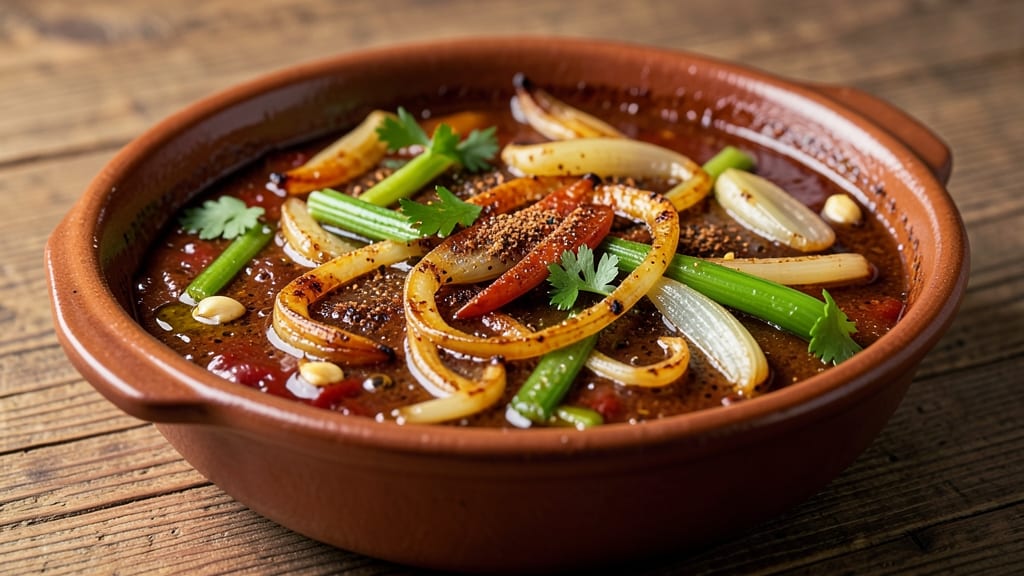
Atchafalaya sauce transforms any dish into a Cajun masterpiece with its smoky, spicy depth and signature celery crown crunch. This recipe captures the soul of Louisiana cuisine—where tomatoes, bell peppers, and celery simmer into a velvety base, then get kicked into high gear with cayenne, smoked paprika, and thyme. The secret lies in balancing heat and texture, creating a sauce that’s bold enough for gumbo but versatile enough to drizzle over grilled shrimp or pasta.
The magic happens in the slow simmer, where onions and garlic develop sweetness before blending with roasted bell peppers and celery. A touch of Worcestershire and a splash of vinegar add complexity, while a final toss with crispy fried celery crowns delivers that iconic crunch.
What you’ll end up with is a sauce that’s rich, aromatic, and packed with layers—perfect for dipping, topping, or stirring into soups.
This sauce keeps beautifully in the fridge for up to a week, so make a big batch to enjoy throughout the week. Whether you’re serving it alongside fried catfish, spooning it over shrimp scampi, or using it as a marinade, it brings that unmistakable Cajun flair to every bite.
The best part? It’s easier to make than you think, and the results are restaurant-quality.
Ready to elevate your cooking? Let’s get started—this sauce will become your new go-to for adding smoky, spicy heat with every spoonful.
Ingredients for atchafalaya sauce
Pantry staples plus a few Cajun essentials for this smoky, spicy sauce masterpiece.
| Ingredient | Amount | Notes |
|---|---|---|
| Celery Stems 🧅 | 4 whole | For celery crowns, cut into 1-inch pieces |
| Bell Peppers 🌶️ | 3 whole | Green, roasted for sweetness |
| Yellow Onions 🧅 | 2 whole | Yellow or white preferred |
| Garlic Cloves 🧄 | 4 cloves | Peeled, minced for depth |
| Canned Tomato Sauce 🍅 | 1 can | 28 oz can, San Marzano preferred |
| Smoked Paprika 🌶️ | 2 tbsp | For authentic smoky flavor |
| Ground Cayenne Pepper 🔥 | 1 tsp | Adjust for heat preference |
| Dried Thyme 🌿 | 1 tsp | Or 1 tbsp fresh thyme |
| Worcestershire Sauce 🍶 | 1 tbsp | For umami depth |
| Apple Cider Vinegar 🍋 | 1 tbsp | Brightens the sauce |
| Olive Oil 🫒 | ½ cup | Extra-virgin for richness |
| Salt 🧂 | 1 ½ tsp | Diamond Crystal preferred |
| Black Pepper 🌶️ | ½ tsp | Freshly ground preferred |
The celery crowns are non-negotiable for that signature crunch. Look for thick, firm celery stalks—the thicker the better for those crispy fried pieces. Whole Foods or local farmers markets often have the best quality. For the bell peppers, roasting them whole under the broiler (or on a gas grill) brings out their natural sweetness. Trader Joe's carries pre-roasted ones in a jar, which is a time-saver. The onions should be yellow or white—they caramelize better than red. If you're feeling fancy, Costco sells bulk onions at a great price, but the regular grocery store stuff works just fine.
No smoked paprika? Substitute half the amount with regular paprika plus a pinch of liquid smoke. Fresh thyme is ideal, but dried works at one-third the amount—just make sure it smells vibrant, not dusty. Running out of Worcestershire? Soy sauce plus a splash of balsamic vinegar mimics the umami punch. The apple cider vinegar can be swapped for white vinegar, but it adds a nice fruity note. For the celery crowns, cut the tough strings off the bottom first—that's where all the bitterness hides. If you're nervous about frying, bake them at 400°F for 10-12 minutes until crispy.
This sauce tastes even better the next day as the flavors meld. Store it in an airtight container in the fridge for up to 1 week, or freeze for 3 months. I always double the batch—one for immediate use, one to freeze for lazy weeknights. The celery crowns stay crispy for about 3 days if stored separately in a sealed container. Pro tip: Add a thin layer of olive oil to the surface before sealing to preserve freshness and prevent a skin from forming.
Why You'll Love This Recipe
- Pantry Magic: I swear by this sauce because it’s built from ingredients you already have. No special shopping trips—just celery, bell peppers, onions, and a can of tomato sauce. That’s it. The kind of recipe that turns a Tuesday into a "I actually cooked something" night.
- Savory Soul: The garlic and onions caramelize into something deep and rich, while the bell peppers add that bright, almost sweet kick. Honestly, it’s the kind of flavor that makes you pause mid-bite—like when you realize you’re actually enjoying the process.
- Endless Pairings: This sauce is my secret weapon for lazy nights. Dump it over shrimp, chicken, or even eggs for breakfast. (Yes, even on a Tuesday.) It’s the kind of base that works for weeknight dinners, potlucks, or when you’re feeding a crowd and need something reliable.
- Budget-Friendly Staple: Between us, this recipe saves me money in two ways: it’s cheap to make, and the leftovers taste just as good reheated. I’ll often double it, freeze half, and pull it out when I’m too tired to cook. That’s the kind of practicality I live for.
Step-by-step instructions for atchafalaya sauce
Let's build this rich, smoky Cajun sauce that balances heat with sweet roasted vegetables.
Roast the Vegetables for Sweetness and Depth
Preheat your oven to 400°F. Line two baking sheets with parchment paper. Cut the 4 whole celery stems into 1-inch pieces, keeping the leafy tops intact for texture. Halve the 3 whole bell peppers lengthwise, remove seeds, and slice into ½-inch strips. Peel and quarter the 2 whole yellow onions.
Spread the vegetables evenly on the prepared baking sheets, leaving space between pieces. Drizzle with ¼ cup of the olive oil and toss to coat. Roast for 25-30 minutes until the edges are deeply caramelized and the peppers soften. You'll smell that sweet, smoky aroma—this is where the sauce gets its complexity. Remove from oven and set aside.
Char the Aromatics for Maximum Flavor
Heat a large Dutch oven over medium-high heat. Add the remaining ¼ cup olive oil and let it shimmer. Add the 4 cloves garlic cloves and cook for 30 seconds until fragrant—don't let them brown or they'll turn bitter. Immediately add the roasted vegetables, stirring to combine.
Let the mixture cook for 5 minutes to meld flavors. This step develops the sauce's foundation. You'll notice the vegetables release their juices and the garlic infuses the oil with its pungent aroma. Keep the heat at medium to prevent burning while allowing the flavors to develop.
Build the Sauce with Spices and Umami
Add the 2 tbsp smoked paprika, 1 tsp ground cayenne pepper, and 1 tsp dried thyme to the Dutch oven. Stir vigorously to distribute the spices evenly. Cook for 1 minute until the spices are fragrant and the mixture smells earthy and slightly smoky.
Pour in the 1 can canned tomato sauce, 1 tbsp Worcestershire sauce, and 1 tbsp apple cider vinegar. Stir well to combine, scraping up any browned bits from the bottom of the pot. These bits are packed with flavor—don't waste them! Bring the mixture to a gentle simmer over medium-low heat.
Simmer and Season to Perfection
Reduce the heat to low and let the sauce simmer uncovered for 45-60 minutes, stirring occasionally. This long simmer allows the flavors to meld and the sauce to thicken naturally. You want it to coat the back of a spoon with a velvety consistency.
Season with the 1.5 tsp salt and 0.5 tsp black pepper. Taste and adjust the seasoning if needed—you might need a touch more salt to balance the acidity from the vinegar. The sauce should be rich, smoky, and slightly spicy with a hint of sweetness from the roasted vegetables.
Finish and Serve with Crunch
Once the sauce reaches your desired consistency, remove it from heat. For added texture, pulse the celery crowns in a food processor until they resemble coarse breadcrumbs. Stir 2 tbsp of these celery crown crumbs into the sauce just before serving.
Serve the atchafalaya sauce immediately over grilled seafood, chicken, or shrimp. The sauce should be thick enough to cling to your protein but still have a slightly loose consistency. The celery crown crunch adds a delightful textural contrast that's characteristic of this Louisiana classic.
Pro Tips For Making Atchafalaya Sauce
- SWEEAT THE VEGGIES LOW: Atchafalaya sauce isn’t about flashy browning—it’s about building flavor slowly. Cook your celery, bell peppers, and onions on medium-low heat for at least 15 minutes, stirring occasionally, until they’re soft and translucent. I used to rush this and ended up with raw bits that made the sauce taste unbalanced.
- CHOP ONIONS SMALLER THAN YOU THINK: Tiny dice on the onions and garlic—no bigger than 1/8-inch pieces. They’ll dissolve into the sauce instead of sitting as chunks, giving you that deep, even flavor. I learned this the hard way when I left mine in big slices and had to fish them out later.
- STIR THE TOMATO SAUCE: Canned tomato sauce can separate, and you don’t want a watery sauce. Before adding it to the pot, give the can a quick shake or stir with a spoon to redistribute the solids. I skip this sometimes, and the sauce always feels lighter than it should.
- SALT THE SAUCE IN LAYERS: Add half the salt when you start sweating the veggies, then taste and adjust again after the tomato sauce comes in. This way, you’re not guessing—you’re building flavor step by step. I used to dump all the salt at once and either overshot or undershot the mark.
Creative variations of this dish
Spicy Roasted Red Pepper Twist
Swap the green bell peppers for 2 red and 1 yellow bell pepper—their natural sweetness will deepen the sauce's caramelized notes. For extra heat, add ½ tsp crushed red pepper flakes during the simmer.
I like using Trader Joe's roasted red peppers> from the jar to save time, but fresh roasted peppers give the best results. The red peppers add a vibrant color that pairs beautifully with grilled shrimp or blackened fish. 🌶️
Smoky Chipotle Kick
Boost the smokiness by adding 1-2 chipotle peppers in adobo sauce, finely minced, along with the smoked paprika. This adds a deep, smoky heat that works perfectly with pork dishes like pulled pork or carnitas.
For a milder version, remove the seeds and membranes first. I recommend Herdez chipotle peppers> for consistent quality. The sauce will have a richer, more complex flavor profile with this addition.
Creamy Buttermilk Version
For a creamy twist, stir in ¼ cup buttermilk> at the end of cooking. This balances the heat and adds a tangy richness that pairs well with fried catfish or chicken tenders. The buttermilk also helps create a smoother texture.
If you don't have buttermilk, mix ¼ cup milk with 1 tsp vinegar> and let it sit for 5 minutes to curdle. This version is a crowd-pleaser for those who prefer a milder sauce.
Herb-Infused Variations
Experiment with fresh herbs like 1 tbsp chopped parsley> or 1 tsp fresh oregano> at the end for a brighter finish. For a Mediterranean twist, add ½ tsp dried basil> and a pinch of crushed fennel seeds>.
These herbs add freshness that contrasts nicely with the smoky, spicy base. I often use this variation when serving the sauce with grilled vegetables or as a pasta topping.
Sweet and Tangy Glaze
Reduce the sauce by 25%> after simmering for a thicker consistency, then stir in 2 tbsp honey> and 1 tbsp soy sauce> to create a sweet and tangy glaze. This version works beautifully as a marinade for chicken or as a dipping sauce for spring rolls.
The honey balances the acidity from the vinegar, creating a well-rounded flavor. For extra shine, finish with a drizzle of olive oil> before serving. 🍯
Nutrition facts
Frequently asked questions
What's the difference between atchafalaya sauce and remoulade?
Atchafalaya sauce is a smoky, spicy Cajun condiment made with roasted vegetables and cayenne, while remoulade is a creamy, tangy sauce often containing mayo, capers, and mustard. Atchafalaya has a thicker, chunkier texture with celery crown crunch, while remoulade is smoother and more emulsified. Both pair well with seafood, but atchafalaya brings bold heat.
Can I make atchafalaya sauce without a Dutch oven?
Use a heavy-bottomed pot or even a large skillet. The key is to simmer the sauce uncovered on low heat for the full 45-60 minutes to develop the flavors. A Dutch oven just makes it easier to maintain even heat. A stainless steel pot works too, just stir frequently to prevent sticking.
How do I adjust the heat level in this sauce?
Start with the 1 tsp cayenne as written, then taste and adjust. For milder heat, reduce to ½ tsp or use sweet paprika instead. For extra kick, add ¼ tsp cayenne or a pinch of crushed red pepper flakes. Remember, you can always add more heat later—you can't remove it!
What's the best way to store leftover atchafalaya sauce?
Store in an airtight container in the fridge for up to 1 week. The flavors actually improve overnight! For longer storage, freeze for 3 months. Reheat gently on low heat or in the microwave, stirring occasionally. The celery crowns stay crispy for 3 days if stored separately in a sealed container.
Can I use atchafalaya sauce as a marinade?
Yes! It makes an excellent marinade for chicken, shrimp, or fish. For best results, coat your protein thoroughly and marinate for 1-4 hours (no longer for delicate fish). The acidity from the vinegar helps tenderize. Just be aware it will add strong flavor—great for bold dishes like grilled shrimp skewers or blackened catfish.