
Sauces & Condiments
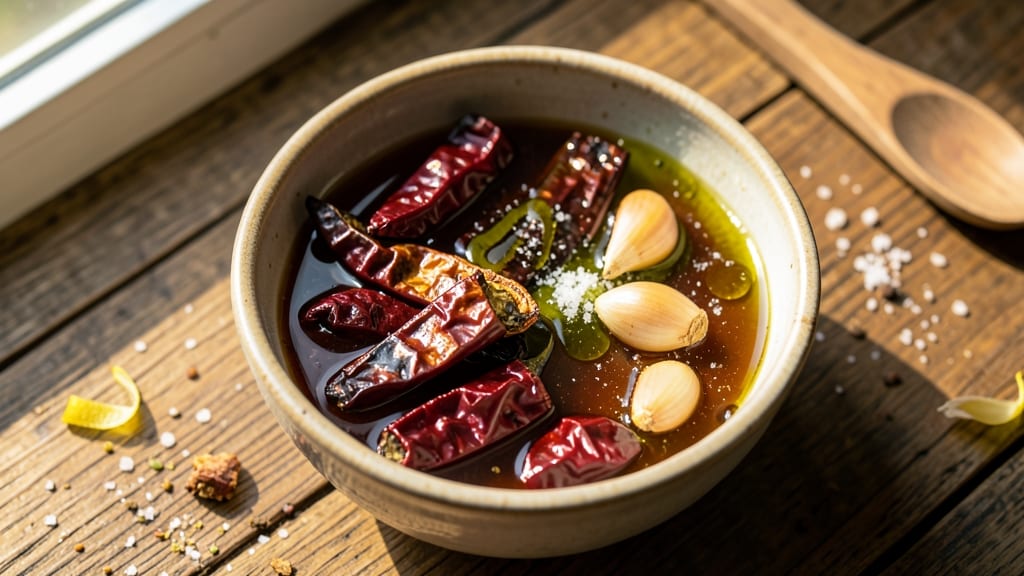
This Arbol chili hot sauce recipe delivers the deep, smoky heat of traditional Mexican cooking in every drop. The arbol peppers—small but mighty—create a complex flavor that lingers without overwhelming, while vinegar and garlic add bright acidity and depth.
I developed this version after perfecting the balance between heat and approachability, making it ideal for drizzling on tacos, grilled meats, or even eggs.
The process is straightforward but requires patience: fermenting the peppers for 24 hours unlocks their full smoky potential, while blending with vinegar and garlic creates a silky, balanced sauce. No blender?
A mortar and pestle works just as well—tradition meets practicality. The result is a sauce that’s bold enough to stand alone but versatile enough to elevate any dish.
What sets this apart is the smoky depth that arbol peppers bring, paired with a tangy finish that cuts through richness. Unlike store-bought versions, this recipe lets you control the heat and complexity.
Store it in the fridge for up to 3 months, or preserve it longer with proper canning techniques.
Perfect for spice lovers who crave authentic, restaurant-quality heat without the harsh burn. Whether you’re making it for a fiesta or just to keep on hand, this sauce will become your go-to for adding fire and flavor. Let’s get started!
Ingredients for arbol chili hot sauce
Nine ingredients transform into restaurant-quality heat with smoky complexity and balanced tang.
| Ingredient | Amount | Notes |
|---|---|---|
| Arbol Chilies 🌶️ | ½ oz | Dried, stems removed |
| White Vinegar 💧 | 1 cup | Distilled preferred |
| Garlic Cloves 🧄 | 4 cloves | Fresh, peeled |
| Extra-Virgin Olive Oil 🫒 | ¼ cup | High-quality, fruity |
| Apple Cider Vinegar 🍎 | ½ cup | For tangy depth |
| Granulated Sugar 🍚 | 1 tbsp | Balances heat |
| Salt 🧂 | ½ tsp | Diamond Crystal preferred |
| Ground Cumin 🌿 | ½ tsp | Toasted for warmth |
| Smoked Paprika 🌶️ | ½ tsp | For smoky depth |
Arbol chilies are the heart of this sauce—Mexican specialty markets or online spice shops like Cholula carry them reliably. Look for vibrant, deep red peppers with no mold or moisture. If you can't find arbols, ancho or guajillo chilies work in a pinch (adjust heat to taste). The vinegar matters too—distilled white vinegar gives clean acidity, while apple cider adds subtle sweetness. For extra depth, ferment the peppers in vinegar for 24 hours before blending, but the quick soak method still delivers great results.
No arbol chilies? Dried chipotle peppers at half the amount bring smokiness, though less heat. Fresh garlic is ideal, but garlic powder at one-third the amount works if you're short on time. The sugar isn't just for sweetness—it helps balance the vinegar's sharpness and caramelizes slightly during storage. For an extra smoky kick, add a pinch of liquid smoke (start with 1/8 tsp). If you're sensitive to heat, reduce the chilies by 1/4 oz and increase the sugar by 1 tsp to mellow the flavor.
This sauce keeps beautifully—3 months in the fridge in a clean glass jar with a tight seal. For longer storage, sterilize jars and use proper canning techniques for up to 1 year. The flavor actually improves over time as the ingredients meld. Store it in the darkest part of your fridge to prevent color fading. When ready to use, give it a good shake before drizzling—settling happens. I like to keep a small jar on hand for daily use and freeze extras in ice cube trays for portion control.
Why You'll Love This Recipe
- No Chopping Required: I swear by this—just toast the arbol chilies whole, then blend them with vinegar and garlic. The heat builds naturally, no knife skills needed. (Between us, I burn my fingers trying to dice chilies anyway.)
- Smoky-Garlic Heat: That first taste? Bright, tangy, with a slow-burning smokiness from the arbols and a punchy garlic finish. Honestly, it’s the kind of sauce that makes you reach for the chips and the salsa.
- Game for Any Meal: Drizzle it on eggs, toss it into tacos, or use it to wake up a boring salad. I keep a bottle in my fridge for when I need to turn something simple into something ridiculously good—no fancy planning.
- Lasts for Weeks: Make a big batch (it’s cheap to do!) and store it in the fridge. The vinegar keeps it fresh, and I’ve had this sauce linger for months. Plus, the more it sits, the deeper the flavor gets—like a secret weapon for lazy days.
Step-by-step instructions for arbol chili hot sauce
Here's how to craft a bold, smoky hot sauce that delivers complex heat with every drop.
Toast the Arbol Chilies for Depth
Heat a dry skillet over medium heat and add the 0.5 oz arbol chilies, stems removed. Toast them for 1-2 minutes, stirring constantly, until they darken slightly and release their aromatic oils. You'll smell that unmistakable smoky, slightly fruity chili essence - this is your flavor foundation.
Watch carefully - arbol chilies burn quickly. Remove them immediately when they're just beginning to darken, not when they're blackened. Transfer the toasted chilies to a bowl and let them cool completely before processing. This step develops their natural oils and removes any bitterness from the stems.
Blend the Base Ingredients
In a blender, combine the toasted arbol chilies with the 4 cloves garlic cloves, 1 cup white vinegar, 0.5 cup apple cider vinegar, and 0.25 cup extra-virgin olive oil. Blend on high speed for 1-2 minutes until completely smooth, scraping down the sides as needed. The mixture should be silky with no visible texture.
Here's the thing - the vinegars work together to create both sharp acidity and subtle sweetness. The olive oil carries the heat while adding a luxurious mouthfeel. Pulse occasionally during blending to prevent overheating the motor. You're building layers of flavor that will develop beautifully during the cooking process.
Simmer and Develop Complexity
Transfer the blended mixture to a small saucepan and add the 1 tbsp granulated sugar, 0.5 tsp salt, 0.5 tsp ground cumin, and 0.5 tsp smoked paprika. Bring to a gentle simmer over medium-low heat, then reduce to the lowest possible setting that maintains a bare simmer. Cook uncovered for 20-25 minutes, stirring occasionally.
Watch for the sauce to thicken slightly and develop a glossy sheen. The sugar will caramelize just enough to balance the heat, while the spices infuse their smoky warmth. You'll notice the aroma deepen as the flavors meld - this is when the sauce truly comes together. Don't walk away; occasional stirring prevents scorching and helps distribute heat evenly.
Strain and Bottle
Remove from heat and let the sauce cool for 5 minutes. Then carefully strain it through a fine-mesh sieve into a clean bottle or jar, pressing gently on the solids with a spoon to extract all the flavorful liquid. The strained sauce should be vibrant red with a slightly oily sheen - this indicates proper extraction of all the chili's heat and aroma compounds.
Your sauce is now ready to use immediately, but it will continue developing flavor for up to 2 weeks when stored in the refrigerator. The heat will mellow slightly as the spices settle, while the complexity deepens. This resting period allows all the components to harmonize perfectly. For best results, use within 3 months for peak freshness and intensity.
Pro Tips For Making Arbol Chili Hot Sauce
- Toast the Chilies First: Dry toast the arbol chilies in a skillet over medium heat for 30 seconds per side until fragrant—this deepens their smoky flavor and prevents bitterness. I used to skip this, and the sauce always tasted flat until I tried it.
- Peel Garlic After Cooking: Peel the garlic cloves after they’ve softened in the oil, not before—this keeps them from burning and turns them into a silky, caramelized base. My grandmother swore by this, and she was right: raw garlic in hot sauce is a crime.
- Simmer Low and Slow: Reduce heat to the lowest setting after adding vinegar and let it bubble gently for at least 15 minutes—this ensures the chilies release their heat evenly without turning the sauce into a bitter sludge. I learned this the hard way after making a batch that tasted like vinegar overload.
- Strain Twice for Smoothness: Use a fine-mesh strainer first to catch seeds and skins, then press the mixture through a cheesecloth for a silky texture—this makes all the difference if you’re serving it with creamy dishes. Yes, it’s extra work, but your future self will thank you.
Troubleshooting this recipe
Uneven Heat Distribution
If your sauce tastes patchy—some drops scorching hot while others barely register—you likely didn’t toast the arbol chilies evenly. Toast them in a single layer over medium heat for 1-2 minutes, stirring constantly until they darken uniformly.
Uneven toasting creates hot spots where peppers burn, while others stay raw. For extra consistency, pulse the toasted chilies in a food processor before blending to break them into smaller, uniform pieces. 🌶️
Sauce Too Thin or Watery
A runny sauce usually means too much vinegar or insufficient simmering time. Reduce the white vinegar to ¾ cup and simmer uncovered for an extra 5-10 minutes to thicken naturally.
If it’s still too thin, blend in 1 tsp cornstarch mixed with 1 tbsp cold water and simmer for another 3-5 minutes. Avoid adding extra sugar—it’ll caramelize and make the sauce cloying rather than balanced.
Bitter or Harsh Taste
Bitterness sneaks in when arbol chilies aren’t toasted properly or if the vinegar overpowers the blend. To fix it, toast the chilies longer (up to 3 minutes) until they darken but don’t burn.
For a quick remedy, add ½ tsp honey or maple syrup to the simmering sauce to mellow the harshness. Straining through a fine-mesh sieve also removes bitter sediment—press gently with a spoon to extract all the flavor without the bitterness.
Sauce Separates or Splits
Separation happens when oil and vinegar aren’t emulsified properly. Blend the sauce longer (2-3 minutes) on high speed, or use an immersion blender for better control. If it splits later, whisk in 1 tsp mustard or a dash of xanthan gum to stabilize the emulsion.
For prevention, always simmer the sauce uncovered—trapped steam can cause separation. Store in a glass jar with a tight seal to maintain consistency.
Mold or Fermentation Gone Wrong
If your sauce develops mold (fuzzy spots) or smells sour after storage, it’s time to toss it. To prevent this, sterilize jars before bottling and store the sauce in the darkest part of your fridge (like a pantry fridge).
For extended shelf life, add ½ tsp citric acid during simmering—it acts as a natural preservative. If you notice fermentation (bubbles, strong alcohol smell), reduce the sugar slightly next time to slow yeast activity.
Heat Too Mild or Too Harsh
Adjust heat by controlling the arbol chili quantity. For milder sauce, reduce to 0.3 oz and add ½ tsp extra sugar. For hotter sauce, increase to 0.7 oz but simmer longer (30 minutes) to mellow the raw pepper intensity.
If it’s still too harsh, blend in 1 tbsp tomato paste to dilute the heat while adding depth. Always taste as you go—heat perception varies, so trust your palate over measurements.
Nutrition facts
Frequently asked questions
Can I substitute arbol chilies with other peppers?
Yes, but the flavor will change. For smoky heat, use 0.3 oz chipotle peppers in adobo (soaked and drained) or 0.5 oz guajillo chilies (remove stems/seeds). Both work but lack arbol’s bright, fruity kick. Avoid fresher peppers like jalapeños—they won’t develop the same depth during simmering.
How do I adjust the heat level?
For milder heat, reduce arbol chilies to 0.25 oz and add ½ tsp extra sugar to balance. For extra fire, increase to 0.75 oz but simmer 30 minutes to mellow raw pepper intensity. Always taste as you go—heat perception varies! Remember, the vinegar’s acidity can make heat feel more intense.
Why does my sauce taste bitter?
Bitterness usually means under-toasted chilies or overpowering vinegar. Toast peppers 1-2 minutes longer until dark but not burnt. For quick fixes, add ½ tsp honey during simmering or strain through a fine-mesh sieve to remove bitter sediments. The sugar in the recipe helps prevent this—don’t skip it!
Can I make this sauce without a blender?
Toast the chilies, then grind them with garlic in a mortar and pestle until fine. Mix with vinegars and oil in a jar, shake vigorously, then simmer as directed. The texture will be slightly chunkier but still packed with flavor. For smoother results, use a food processor or high-powered spice grinder. Traditional methods work just as well!
How long should I ferment the peppers?
Fermenting isn’t required but enhances depth. Soak toasted chilies in vinegar for 24 hours before blending for maximum smoky flavor. If short on time, a 1-hour soak still works—just simmer longer (30 minutes) to develop complexity. The fermentation step isn’t critical but unlocks the peppers’ full potential.