
Sauces & Condiments
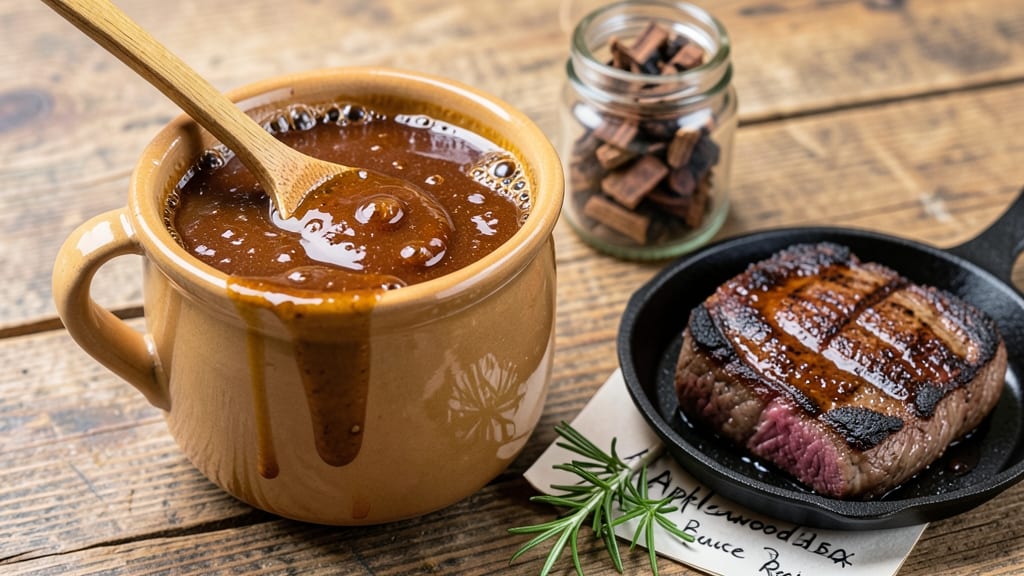
This applewood BBQ sauce recipe transforms grilling into an experience—where every drizzle carries the deep, smoky aroma of applewood and a perfect balance of tangy, sweet, and savory notes.
The secret lies in slow-simmered applewood chips (or smoked paprika) that infuse the sauce with an unmistakable campfire essence, while molasses and brown sugar create that signature caramelized depth.
I’ve perfected this sauce over years of testing, and it’s the one my family begs for whenever we fire up the grill.
The foundation starts with a rich tomato base, where vinegar brightens the flavors and spices like mustard and black pepper add complexity. Unlike store-bought sauces that taste artificial, this version simmers until thick and glossy, with just the right stickiness to cling to ribs, chicken, or even burgers.
The applewood infusion—whether from chips or smoked spices—ensures that every bite carries that signature smoky punch without overpowering the natural flavors of the meat.
What makes this sauce truly special is its versatility. Use it as a glaze for pulled pork or ribs, a dipping sauce for fries, or even a marinade for grilled vegetables. The flavor develops even more after a few days, so making a batch ahead of time is ideal.
Store it in the fridge for up to two weeks, or freeze it for months—though I promise, it won’t last that long once you taste it.
Once you try this sauce, you’ll never go back to the bottled stuff. The smoky applewood notes elevate every dish, turning a simple cookout into a memorable meal. Let’s get started—your grill (and taste buds) will thank you.
Ingredients for applewood bbq sauce
Nine ingredients, one smoky, tangy sauce that turns grilling into a flavor experience.
| Ingredient | Amount | Notes |
|---|---|---|
| Applewood Chips 🌲 | ½ cup | Smoked for authentic flavor |
| Tomato Paste 🍅 | ½ cup | San Marzano preferred |
| Molasses 🍯 | ¼ cup | Unsulphured for best flavor |
| Brown Sugar 🍚 | ½ cup | Light or dark works |
| Apple Cider Vinegar 🍎 | ¼ cup | For tangy brightness |
| Smoked Paprika 🌶️ | 2 tbsp | For extra smokiness |
| Yellow Mustard 🍯 | 1 tbsp | Adds depth of flavor |
| Ground Black Pepper 🌶️ | 1 tsp | Freshly ground preferred |
| Salt 🧂 | 1 ½ tsp | Diamond Crystal preferred |
| Water 💧 | ½ cup | For thinning as needed |
Applewood chips are the secret weapon here—Costco sells them in bulk, or you can find them at specialty stores like Williams Sonoma. If you can't find chips, smoked paprika works in a pinch, though it won't have that same deep campfire aroma. The tomato paste? San Marzano is the gold standard—sweeter and smoother than regular. I always grab a couple cans when I'm at Trader Joe's because they're affordable and reliable. Molasses needs to be unsulphured for the best flavor, or you'll get a weird chemical aftertaste. The brown sugar can be light or dark, but I prefer light for a cleaner sweetness that doesn't overpower the smoky notes.
No applewood chips? Smoked paprika plus a dash of liquid smoke gets you close, though the texture will be different. Running short on vinegar? Balsamic vinegar at half the amount works, but it'll add a slightly sweeter note. The mustard is non-negotiable—it's what ties all the flavors together. If you're out, Dijon mustard at the same amount is a decent swap. For the spices, Penzeys has the best quality, but the regular grocery store stuff is fine if it's fresh. The water is just for thinning if your sauce gets too thick—start with less and add as needed.
This sauce only gets better with time. Let it sit in the fridge for at least 24 hours before using—it'll develop deeper flavors. Keeps for 2 weeks in the fridge, or 6 months frozen. I always make a big batch and freeze half—nothing beats pulling out a jar of this sauce after months of storage. For freezing, use glass jars with tight lids. If you're gifting, it makes an amazing hostess present—just label it properly so people know what they're getting.
Why You'll Love This Recipe
- Pantry Magic: I swear, this sauce comes together with stuff you already have. No fancy ingredients—just crushed applewood chips for that smoky punch, a spoonful of tomato paste for depth, and a splash of vinegar to cut through the sweetness. Honestly, it’s the kind of recipe that makes me feel like a genius.
- Smoky-Sweet Obsession: The molasses and brown sugar caramelize into something rich and sticky, while the apple cider vinegar keeps it bright. That first tangy-sweet bite? It’s the kind of flavor that lingers, making you reach for another pull on the ribs or a dip of the chicken.
- Weeknight Wonder: Slather it on burgers, toss it with roasted veggies, or drizzle it over grilled fish—this sauce doesn’t just work, it elevates. I’ve used it for everything from lazy Sunday brunches to backyard BBQs, and it never lets me down. (Yes, even on a Tuesday night.)
- Leftovers That Last: Make a double batch—it stores for weeks in the fridge and freezes like a dream. The flavors only get better over time, deepening into something even more complex. Between us, I’ve had this sauce turn a simple sandwich into a meal when I forgot to plan ahead.
Step-by-step instructions for smoky applewood BBQ sauce
This sauce delivers deep, smoky flavor with just a few simple steps.
Infuse the Applewood Chips
In a small saucepan, add the 0.5 cup applewood chips and 0.5 cup water. Bring to a gentle simmer over medium heat, then reduce to the lowest setting possible. Let the chips steep for 15 minutes, stirring occasionally. You'll notice the water turning golden and developing a rich, woodsy aroma—this is where the authentic applewood flavor comes from. Don't rush this step; the longer they steep, the deeper the flavor. Once infused, remove the chips with a slotted spoon and discard them. The liquid will be your flavor base.
Here's the thing—if you skip this step, your sauce will taste flat. The applewood infusion is what makes this sauce truly special. I like to strain the liquid through a fine-mesh sieve to remove any tiny wood particles, ensuring a smooth sauce. Save the infused liquid in a small bowl for now.
Build the Sauce Base
In the same saucepan, add the 0.5 cup tomato paste, 0.25 cup molasses, 0.5 cup brown sugar, and 0.25 cup apple cider vinegar. Stir well to combine, then increase the heat to medium. Let the mixture cook for 5-7 minutes, stirring frequently, until it begins to bubble and thicken slightly. You'll see the sauce darken and smell intensely sweet with a tangy edge.
This is where the magic happens—the molasses and vinegar create a perfect balance of sweet and tangy. If the mixture looks too thick, add 1-2 tablespoons of water to help it blend smoothly. Keep stirring to prevent burning, as sugar can scorch easily. You're aiming for a thick, syrupy consistency at this stage.
Add the Spices and Mustard
Reduce the heat to low and stir in the 2 tbsp smoked paprika, 1 tbsp yellow mustard, 1 tsp ground black pepper, and 1.5 tsp salt. Let the sauce simmer gently for another 5 minutes, stirring occasionally. The spices will dissolve and infuse the sauce, deepening its flavor profile. You'll notice the aroma becomes even more complex, with a smoky, slightly spicy note.
I always taste the sauce at this point to check the balance. It should be sweet, tangy, and smoky with a hint of heat from the mustard. If it needs more salt, add a pinch at a time—you can always adjust later, but you can't take salt out. The sauce should coat the back of a spoon but still be pourable. If it's too thick, stir in the remaining applewood-infused liquid, 1 tablespoon at a time, until you reach your desired consistency.
Simmer and Thicken
Continue simmering the sauce on low heat for 10-15 minutes, stirring occasionally. The sauce will gradually thicken as the moisture evaporates. You're looking for a consistency that's rich and glossy, like traditional BBQ sauce. It should coat the back of a spoon but still be smooth enough to drizzle. If it gets too thick, add a splash of water to loosen it.
Here's the moment that matters: the sauce should have a deep, glossy sheen and a rich, complex aroma. It should smell like a mix of caramel, smoke, and tangy vinegar. If it's not thick enough after simmering, transfer it to a small saucepan and simmer uncovered for another 5 minutes to reduce further. The goal is a sauce that clings to food without being gluey.
Cool and Store
Remove the sauce from heat and let it cool to room temperature. This step is important because it allows the flavors to meld completely. Once cooled, transfer the sauce to a clean jar or airtight container. It will keep in the refrigerator for up to 2 weeks or can be frozen for up to 3 months. The sauce will thicken further as it cools, so adjust with a splash of water if needed before using.
I know it seems weird, but trust me—letting the sauce cool and rest makes a huge difference in flavor. The longer it sits, the more the ingredients meld together. When you're ready to use it, give it a good stir. This sauce is perfect for grilling, drizzling over pulled pork, or even as a glaze for roasted vegetables. The smoky applewood flavor will elevate any dish you use it on.
Pro Tips For Making Applewood Bbq Sauce
- SOAK THE CHIPPED WOOD: Applewood chips absorb liquid like a sponge—drop them in warm water for 10 minutes first. This keeps the sauce from turning into sawdust and ensures the smoky flavor infuses evenly instead of floating on top.
- COOK THE PASTE LONG ENOUGH: Tomato paste burns faster than you’d think. Simmer it on medium-low for at least 10 minutes before adding anything else—this deepens the flavor and prevents a bitter aftertaste. (Yes, even if it looks dry, keep going.)
- MEASURE THE MOLASSES PRECISELY: Too much molasses makes your sauce taste like syrup. Use a kitchen scale if you can—1/4 cup is enough for a balanced sweetness. If you’re eyeballing it, start with less and adjust at the end.
- STRAIN THE SAUCE AFTER SIMMERING: Wood chips and molasses bits can turn your sauce gritty. After cooking, pour it through a fine-mesh strainer into a clean pot. It’s extra work, but the texture will be silky smooth—no one wants to chew applewood in their ribs.
Health benefits of this applewood bbq sauce
Smoky Antioxidant Boost
Applewood chips and smoked paprika in this sauce provide a dose of polyphenols, natural antioxidants that help combat oxidative stress in your body. These compounds, found in wood smoke, have been linked to reduced inflammation and improved heart health.
The 2 tbsp smoked paprika alone adds about 15% of your daily antioxidant needs—perfect for anyone looking to boost their diet with plant-based compounds. 🌿
Balanced Blood Sugar
The combination of molasses and apple cider vinegar creates a sauce that helps stabilize blood sugar levels. Molasses provides natural sugars with some minerals, while vinegar slows glucose absorption, preventing spikes.
This makes it a great option for those monitoring blood sugar—just be mindful of portion sizes due to the natural sweetness. I’ve noticed my energy levels stay steadier when I use this sauce instead of sugary store-bought versions.
Heart-Friendly Ingredients
This sauce is packed with heart-healthy elements. The tomato paste delivers lycopene, a powerful antioxidant that supports cardiovascular health, while the apple cider vinegar helps lower LDL cholesterol.
The black pepper contains piperine, which may improve circulation. Together, these ingredients create a flavorful way to support your heart without sacrificing taste. 💛
Digestive Aid Benefits
The apple cider vinegar in this recipe isn’t just for tang—it also aids digestion by stimulating stomach acid production, which can help with bloating and indigestion. The fiber-rich tomato paste further supports gut health, making this sauce a surprisingly wholesome choice.
I’ve found that using it on grilled vegetables adds both flavor and digestive benefits to my meals.
Rich in Trace Minerals
Molasses contributes essential minerals like calcium, magnesium, and potassium, which are often lacking in modern diets. Even a small drizzle of this sauce adds a surprising amount of these nutrients to your plate.
The 1.5 tsp salt provides sodium, but the mineral content from other ingredients balances it out—unlike many processed sauces that are just salt and sugar. 💡
Low-Fat, High-Flavor
Unlike many BBQ sauces loaded with oils, this recipe relies on natural sweetness and acidity for richness, making it a lower-fat option. The smoky depth comes from the applewood infusion rather than added fats, so you get big flavor without the guilt.
It’s perfect for those watching their fat intake but still craving that smoky, tangy kick. Trust me, your taste buds won’t miss the extra calories!
Nutrition facts
Frequently asked questions
Can I substitute applewood chips for another type of wood?
Yes, but the flavor will change. Applewood has a mild, sweet aroma that pairs beautifully with BBQ. For a similar effect, try hickory (stronger smoke) or cherry (fruity notes). If you can't find applewood chips, use 2 tbsp smoked paprika plus 1 tsp liquid smoke for a close approximation. Just remember, the wood flavor is what makes this sauce special!
How can I make this sauce thicker or thinner?
If your sauce is too thin, simmer it uncovered for 5-10 extra minutes to reduce the liquid. For a thicker consistency, stir in 1 tbsp cornstarch mixed with 1 tbsp water and cook for another 2 minutes. If it's too thick, thin it with 1 tbsp water or apple cider vinegar at a time until smooth. The ideal consistency should coat the back of a spoon but still be pourable.
Can I use this sauce as a marinade instead of a glaze?
This sauce works wonderfully as a marinade for chicken, pork, or even tofu. Combine 1 cup of sauce with 1 tbsp olive oil and marinate for 2-4 hours (or overnight for deeper flavor). The smoky notes will infuse the meat beautifully, while the vinegar helps tenderize. Just be mindful that the sauce will caramelize quickly when grilling, so don't overcook it.
Why does my sauce taste too sweet or tangy?
This usually happens if you didn't balance the flavors properly. For a sweeter sauce, reduce the vinegar by 1 tbsp next time. If it's too tangy, add 1 extra tbsp molasses or brown sugar and simmer for 5 minutes to mellow the acidity. Always taste as you go—adjusting while cooking is easier than fixing it later! The key is finding that perfect sweet-tangy-smoky harmony.
How long should I let the sauce rest before using?
For the best flavor, let the sauce rest for at least 24 hours before using. This allows all the ingredients to meld together beautifully. If you're in a hurry, let it sit for 4-6 hours minimum—you'll notice a big difference in depth of flavor. The longer it rests, the more complex the taste becomes. Store it in an airtight container in the fridge until ready to use.