
Sauces & Condiments
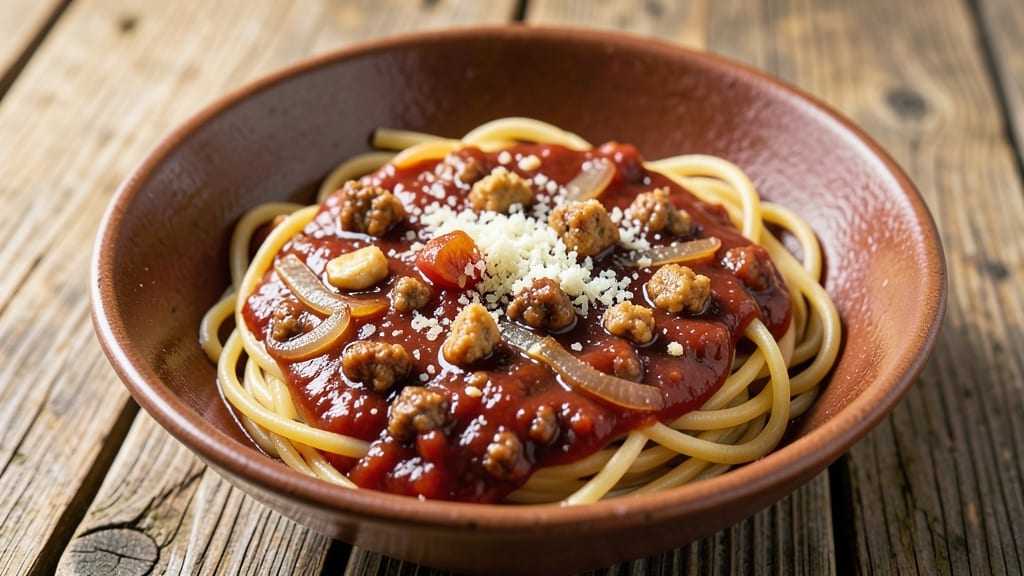
This American spaghetti sauce recipe delivers the rich, meaty depth that makes Sunday dinners unforgettable. The secret lies in slow-cooked ground beef, caramelized onions, and a blend of canned and fresh tomatoes that build layers of umami flavor over time.
What sets this sauce apart is the balance—tangy enough from tomato paste, sweetened just enough with brown sugar, and deepened with garlic, oregano, and a bay leaf that infuses every spoonful.
Unlike quick sauces that rely on shortcuts, this recipe earns its complexity through a 30-minute simmer that lets flavors meld together. The ground beef browns deeply for a savory base, while the tomatoes reduce into a velvety consistency that clings perfectly to pasta.
It’s the kind of sauce that tastes even better the next day, making it ideal for meal prep or holiday gatherings.
By the time you’re done, you’ll have a sauce that’s classic in every sense—bold, balanced, and brimming with the kind of homestyle flavor that turns simple spaghetti into a centerpiece. The aroma alone will have everyone asking for seconds, and the texture?
Silky enough to coat each noodle without being watery. This is the sauce that makes Italian-American comfort food feel like a warm embrace.
Serve it over al dente pasta with a sprinkle of fresh basil, pair it with garlic bread, or use it as a base for meatball subs. The possibilities are endless, but the foundation is always the same: layers of flavor built one ingredient at a time. Let’s get started.
Ingredients for american spaghetti sauce
Eleven ingredients that build umami depth through slow simmering and balanced seasoning.
| Ingredient | Amount | Notes |
|---|---|---|
| Ground Beef 🥩 | 1 ½ lb | 80% lean for rich flavor |
| Yellow Onion 🧅 | 1 whole | Diced into small pieces |
| Garlic Cloves 🧄 | 4 cloves | Minced for aromatic depth |
| Canned Crushed Tomatoes 🍅 | 28 oz | San Marzano preferred |
| Tomato Paste 🍅 | 1 tbsp | For concentrated tang |
| Brown Sugar 🍯 | 1 tbsp | Balances acidity |
| Dried Oregano 🌿 | 1 tsp | Italian variety preferred |
| Bay Leaf 🌿 | 1 whole | Removed before serving |
| Olive Oil 🫒 | 2 tbsp | Extra-virgin for richness |
| Salt 🧂 | 1 ½ tsp | Diamond Crystal preferred |
| Black Pepper 🌶️ | ½ tsp | Freshly ground preferred |
The ground beef is non-negotiable here—80% lean gives you that meaty richness without too much fat. Kroger or Costco usually have it pre-packaged in 1.5 lb bags, which is perfect for this recipe. If you can't find 80% lean, go for 85%—just pat it dry before browning to avoid a greasy sauce. The onions and garlic should be fresh, not frozen, because their sweetness and aroma are the foundation of the flavor. Look for yellow onions with firm, dry skins at the grocery store—they'll keep for weeks in the fridge.
No San Marzano tomatoes? Any good-quality canned crushed tomatoes will work—just check the label for no added salt. The tomato paste can be swapped for tomato sauce at double the amount, but it won't have the same concentrated tang. Italian oregano is a game-changer if you can find it—Trader Joe's carries it, or check the international aisle at Whole Foods. The bay leaf might seem small, but it adds a subtle floral note that elevates everything. If you're short on time, dried basil at half the amount can stand in, though fresh is ideal. The olive oil matters too—a fruity extra-virgin like California Early Harvest adds brightness that cheap oil can't match.
This sauce tastes even better the next day as flavors meld. Store in an airtight container in the fridge for up to 5 days, or freeze in 1-cup portions for 3 months. I always make a double batch—one for dinner, one for lunches. The sauce thickens as it cools, so you can thin it with a splash of water or pasta water when reheating. For extra richness, stir in a spoonful of butter or a splash of cream when serving—classic Italian-American touch.
Why You'll Love This Recipe
- Five-Ingredient Magic: The pantry staples here—ground beef, crushed tomatoes, and that little can of paste—are all I need. No fancy prep, no last-minute grocery runs. Honestly, I’ve made this sauce with whatever was in my fridge, and it still tastes like a hug in a jar.
- Rich Without Effort: That tomato paste? It’s the secret. Just a spoonful browned in the pan with the onions and garlic, and suddenly you’ve got depth—no fancy reductions or simmering for hours. The beef adds meaty satisfaction, and the crushed tomatoes keep it bright. It’s the kind of flavor that builds as it cooks, not the kind that fades.
- Game for Any Night: I use this for spaghetti, sure, but also as a pizza base, stuffed into baked potatoes, or even over toast with a sprinkle of cheese. Between us, I’ve served it at potlucks, game nights, and lazy Sundays—no one ever asks what’s in it, they just ask for more. It’s the ultimate crowd-pleaser without trying too hard.
- Leftovers That Don’t Suck: This sauce actually improves the next day. The flavors meld, the texture thickens just right, and I’ve reheated portions for breakfast burritos or sandwiches without a single complaint. Plus, it freezes like a dream—just portion it out, label it, and thank me later when you’re too tired to cook.
Step-by-step instructions for American spaghetti sauce
This method delivers a rich, balanced sauce with deep umami flavor and perfect texture every time.
🍳 Step 1: Brown the Ground Beef Thoroughly
Heat the 2 tablespoons olive oil in a large Dutch oven over medium-high heat. Add the 1.5 lb ground beef, breaking it apart with a wooden spoon as it cooks. Let the beef brown undisturbed for 3-4 minutes—this creates a flavorful crust. Only stir occasionally to avoid breaking the meat into small pieces.
Once the beef is mostly browned, drain all but 1 tablespoon of the rendered fat from the pot. This fat is pure flavor, and leaving some ensures your sauce won't be too dry. If the bottom of the pot looks dry, add 1 tablespoon water to deglaze and scrape up any browned bits—these contain concentrated meat flavor.
👨🍳 Step 2: Sauté Aromatics Until Fragrant
Add the diced yellow onion to the pot and cook for 5-6 minutes until softened and translucent. I like to press down gently with a spoon to help it caramelize slightly—this adds sweetness to the sauce. Then add the minced garlic cloves and cook for 30 seconds until fragrant, stirring constantly to prevent burning.
Here's the thing—garlic burns faster than you think. Watch it closely and remove the pot from heat if it starts to darken. The goal is aromatic depth, not charred bits. Once the garlic is fragrant but still pale, it's ready for the next step.
🍳 Step 3: Build the Sauce Foundation
Stir in the 1 tablespoon tomato paste and cook for 1 minute until it darkens slightly and coats the beef and onions. This step develops the sauce's depth and prevents a raw tomato flavor. Then pour in the 28 oz canned crushed tomatoes, breaking up any large chunks with your spoon.
Add the 1 tablespoon brown sugar, 1 tsp dried oregano, 1 whole bay leaf, 1.5 tsp salt, and 0.5 tsp black pepper. Stir well to combine all ingredients. The brown sugar helps balance the acidity of the tomatoes, while the oregano and bay leaf add classic Italian flavor. Bring the mixture to a gentle simmer over medium heat.
⏰ Step 4: Simmer Until Thick and Flavorful
Reduce heat to low and let the sauce simmer uncovered for 45-60 minutes, stirring occasionally. This slow cooking allows the flavors to meld and the sauce to thicken naturally. You'll see the sauce reduce and develop a glossy sheen—this is when you know it's working.
Taste the sauce after 30 minutes and adjust seasoning if needed. I usually add another ½ tsp salt at this point because the tomatoes can vary in saltiness. Remove the bay leaf before serving—it's not meant to be eaten. The sauce should coat the back of a spoon and have a rich, meaty consistency.
🍽️ Step 5: Finish and Serve
For a smoother sauce, use an immersion blender to blend about half of the sauce directly in the pot. This creates a velvety texture while keeping some chunkiness for authentic flavor. If you prefer a completely smooth sauce, blend the entire pot and then return it to the heat to warm through.
Serve the sauce immediately over al dente spaghetti, reserving some of the pasta water to thin the sauce if needed. The sauce should cling beautifully to each strand of pasta, delivering that classic American Italian flavor we all love. Store any leftovers in an airtight container in the refrigerator for up to 5 days or freeze for 3 months.
Pro Tips For Making American Spaghetti Sauce
- CRUSH THE GARLIC: Don’t just minced it—smash those cloves flat with the side of your knife first. That releases more flavor, and you’ll need less. I used to overdo it with raw garlic, and it’d taste harsh; now I add just 2 cloves total, crushed and cooked low for 5 minutes.
- SWEAT THE ONIONS LOW: Turn the heat down to medium after the onions start to soften—too high and they’ll burn before they caramelize. I learned this the hard way when my sauce ended up bitter. A properly sweated onion adds depth that raw or charred onions can’t match.
- BROWN THE BEEF FIRST: Don’t just crumble and cook—let the beef form small patties and sear them until deep brown on all sides. That crust packs serious flavor. I skip this when I’m in a rush, but the sauce tastes noticeably lighter and less greasy when you do it right.
- STIR IN THE PASTE LAST: Add the tomato paste after the onions and beef are cooked, not at the start. It burns easily, and if you toss it in raw, it’ll clump and make the sauce look (and taste) uneven. A tablespoon or two is enough—just enough to thicken and deepen the color.
Essential equipment for american spaghetti sauce
Dutch Oven
A large Dutch oven is my go-to for this sauce—it holds all the ingredients comfortably while allowing even heat distribution. I use a 5-6 quart model like the Lodge Pre-Seasoned Cast Iron Dutch Oven because it retains heat beautifully and develops deep, caramelized flavors.
The heavy material also prevents scorching, which is critical when browning ground beef. If you don’t have one, a heavy-bottomed stainless steel pot works too, but it won’t brown the beef as effectively. 🍳
Immersion Blender
An immersion blender is the secret weapon for achieving that perfect balance between chunky and smooth textures. I love the Ninja Countertop Immersion Blender because it’s powerful enough to blend directly in the pot without making a mess.
If you prefer a completely smooth sauce, blend the entire batch—just return it to low heat afterward to warm through. No immersion blender? A regular blender works, but transfer the sauce in batches and return it to the pot carefully. 💫
Wooden Spoon
A long-handled wooden spoon is essential for stirring without scratching your pot. I recommend a sturdy 12-inch model like the OXO Good Grips Wooden Spoon—it’s heat-resistant and won’t warp under high heat. Wood also adds a subtle flavor over time, which complements the sauce beautifully.
Avoid metal utensils when stirring the sauce to prevent scraping off the flavorful fond at the bottom of the pot. 🌿
Measuring Spoons
Precision matters with spices and liquids, so invest in a set of stainless steel measuring spoons. I use the OXO Good Grips Stainless Steel Measuring Spoons because they’re durable and easy to read.
For this recipe, accurate measurements of brown sugar, oregano, and tomato paste ensure the perfect balance of sweetness, acidity, and depth. A cheap set might not give you the same control, especially when working with small amounts like ½ teaspoon black pepper. ⚡
Deglazing Tools
After browning the beef, you’ll want to deglaze the pot to scrape up all those flavorful browned bits. A silicon spatula or wooden spoon works best for this—just add 1 tablespoon water and scrape the bottom as you stir.
I keep a small bowl nearby to catch any excess liquid before adding it to the sauce. This step is non-negotiable for maximum flavor, so don’t skip it! 🔥
Storage Containers
For leftovers, use airtight glass containers like Pyrex or mason jars to preserve freshness. Glass is non-reactive and won’t absorb odors, which is key for sauces with strong flavors.
Label containers with the date to track freshness—this sauce stays great in the fridge for 5 days or frozen for 3 months. If you’re meal prepping, portion it into 1-cup servings for easy reheating. 💡
Nutrition facts
Frequently asked questions
Can I use ground turkey or chicken instead of beef?
Swap the ground beef for 1.5 lb ground turkey or chicken, but keep the cooking time the same. Turkey will give you a slightly leaner sauce, while chicken adds a milder flavor. For extra richness, add 1 tablespoon olive oil when browning the meat to compensate for less fat. The texture will be lighter but still delicious over pasta.
Why does my sauce taste too acidic?
Acidity comes from unbalanced tomatoes or insufficient sweetness. Add ½ teaspoon brown sugar or 1 teaspoon honey to mellow the tang, or stir in 1 tablespoon tomato paste to deepen the flavor. If the sauce is already thick, simmer it uncovered for 5-10 extra minutes to let the acidity mellow naturally.
How do I make this sauce vegetarian?
Replace the ground beef with 1 cup finely chopped mushrooms or 1 package (8 oz) vegetarian crumbles (like Beyond Meat). For extra umami, add 1 teaspoon soy sauce or ½ teaspoon smoked paprika to the simmering sauce. The texture will be lighter but still hearty when paired with pasta or veggie meatballs.
Can I make this sauce in a slow cooker?
Yes! Brown the beef and onions in a skillet first, then transfer everything to a 6-quart slow cooker. Add all remaining ingredients and cook on LOW for 6-8 hours or HIGH for 3-4 hours. The slow cooker will intensify the flavors even more, creating a deeper, more concentrated sauce. Stir occasionally and adjust seasoning at the end.
What's the best way to reheat leftover sauce?
Gently reheat on the stovetop over low heat with a splash of water or pasta water to thin it out. Avoid microwaving—it can make the sauce watery. For frozen portions, thaw overnight in the fridge first, then reheat. If the sauce thickens too much when reheated, stir in 1-2 tablespoons of water or broth to restore the perfect consistency.